
International Women’s Day
Celebrating the Women Who Inspire Us
Every great achievement is built on the shoulders of those who came before us—trailblazers, mentors, and visionaries who push boundaries and redefine what’s possible. On this International Women’s Day, the incredible women of Cyferd are honoring the figures who have inspired them most.
From groundbreaking scientists and fearless leaders to personal mentors and role models, these women have left a lasting impact. Their stories remind us of the power of perseverance, innovation, and the importance of lifting others up.
Join us as we celebrate the women who inspire us and share the stories that continue to shape our journeys.

Zaha Hadid
“Born in Baghdad in 1950, Zaha Hadid shattered barriers to become one of the most influential architects of the modern era. She defied convention with her bold, futuristic designs that transformed cityscapes across the world. Hadid’s journey was not easy. In a male-dominated industry, her early designs were deemed too radical, often remaining on paper, yet she persisted. Her visionary work gained recognition, and in 2004, she became the first woman to receive the prestigious Pritzker Architecture Prize. She won the Stirling Prize for the Evelyn Grace Academy, and even became a dame in 2012, leaving behind an extraordinary legacy when she passed in 2016.
Hadid inspires me because she was fearless in her vision, proving that creativity has no limits and that women can break barriers in any field. Her determination, innovation, and refusal to conform remind us all (especially on International Women’s Day) that the world is shaped by those who dare to dream.”
Hadil Bati
Catherine isn’t just known for her impressive feats in the world of climbing – she has faced many challenges and has always persevered with grace and strength. She wasn’t afraid to break the mold of what was expected of women in a male-dominated sport. She climbed some of the most difficult routes and tackled some of the highest peaks, showing me that strength isn’t just physical, but mental and emotional too.
As a woman, I’ve sometimes found myself questioning my own limits and wondering if I could ever reach the heights I aspire to. But watching Catherine’s journey reminds me that there’s no such thing as “impossible” when you’re determined, focused, and passionate. Her fearlessness and ability to take risks, even in the face of uncertainty, empower me to push past my own doubts.
Catherine Destivelle has truly shown me that as women, we have the strength, resilience, and ability to go after what we want – no matter how big the challenge may seem. She’s a constant reminder that we can redefine what it means to be bold, to be fierce, and to be unapologetically ourselves.”
Oliva Malbornoz

Catherine Destivelle

Jane Goodall
“Jane Goodall changed the way we understand animals forever, and even redefined what it means to be human. In an era when women in science were rare, and with no formal scientific degree at the time, she travelled to Tanzania and immersed herself in the world of chimpanzees, discovering that they used tools, displayed emotions, and formed complex social structures – traits once thought to be uniquely human. Her findings forced the scientific community to expand the definition of man, challenging long-held beliefs about the divide between humans and animals.
Though initially dismissed by skeptics, her groundbreaking work led to global recognition, and in 1977, she founded the Jane Goodall Institute, a powerhouse for wildlife conservation and environmental advocacy. Through her Roots & Shoots program, she has empowered millions of people around the world, myself included, to take action for the planet. Even now, in her late 80s, she continues to travel, speak, and fight for the protection of animals and the environment. Jane is an inspiration to me because she has shown that every action, big or small, makes a difference, and that curiosity, courage, and compassion can reshape our understanding of the world.”
Livvy Kershaw
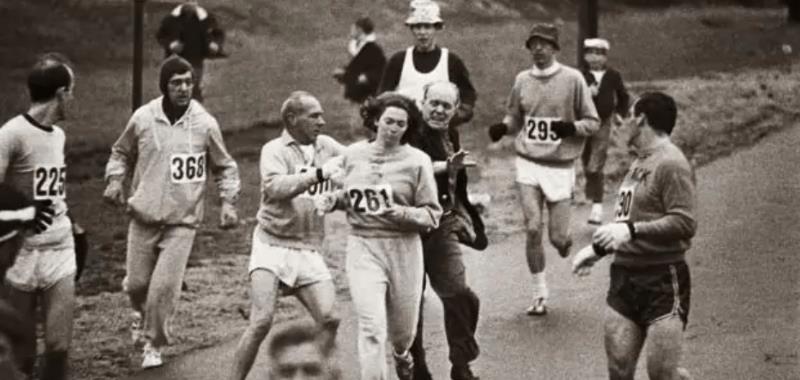
“Kathrine Switzer’s historic run in the 1967 Boston Marathon didn’t just create an iconic sports photo—it shifted the entire landscape for women in sports. At a time when women were deemed incapable of running marathons, Switzer became the first woman to officially register and complete the race.
On race day, her fellow runners greeted her with a mix of surprise and support. One even suggested she remove her lipstick to avoid drawing attention from race organizers, but Switzer refused. She was determined to run as herself, without hiding her femininity.
Mid-race, co-director Jock Semple, a staunch traditionalist, jumped off a press truck and charged at Switzer, attempting to rip off her race number and remove her from the competition. Switzer later reflected, “I knew if I quit, nobody would ever believe that women had the capability to run 26-plus miles. If I quit, everybody would say it was a publicity stunt. If I quit, it would set women’s sports back, way back, instead of forward. If I quit, I’d never run Boston. If I quit, Jock Semple and all those like him would win. My fear and humiliation turned to anger.”
Switzer’s completion of the race sparked a movement that ultimately led to women being officially allowed to compete in the Boston Marathon in 1972.
Her story is a powerful testament to what determination, a refusal to accept societal norms, and a bit of rule-bending can achieve – and I think thats pretty damn inspiring.”
Lucy Broomfield
Kathrine Switzer
Aunt Pilar
“My grandmother’s sister, known in the family as Aunt Pilar, has always been an inspiration due to her forward-thinking mindset. In a time when the norm was to marry and start a family, she chose a different path focused on working and traveling with a deep desire to explore other cultures, places, and people. It seemed as though her days had more hours than most, as she continuously dedicated herself to learning and personal growth, defying the traditional expectations placed on women.
Throughout her life, Aunt Pilar devoted herself to helping others, particularly the most vulnerable. Her energy, resilience, and strength were constant sources of inspiration, even when her own body was barely able to keep up. Her example reminds us that women have the power to shape their own destinies, contribute meaningfully to the world, and persevere with determination, no matter the challenges they face.”
Cristina Fernandez
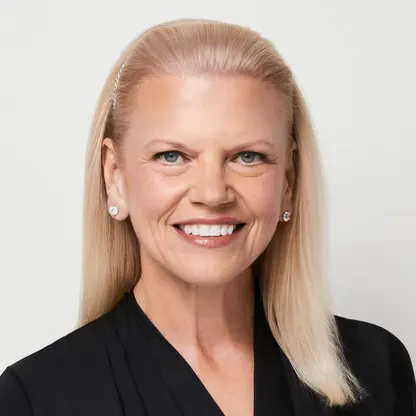
“As the first female CEO of IBM, Ginni Rometty led the company through a period of immense transformation, shaping the future of technology and business. Her strategic vision and relentless drive for innovation not only propelled IBM forward but also set a powerful example of what women can achieve in leadership roles, particularly in the tech industry.
Ginni’s work championing diversity and inclusion has been equally impactful. She has consistently advocated for empowering women and creating opportunities for them to succeed, breaking barriers for future generations. Her leadership philosophy—focused on empowering others, fostering collaboration, and creating pathways for growth—continues to inspire countless women to pursue leadership roles and push the boundaries of what’s possible. She’s left a legacy of empowering women to lead, innovate, and make a difference in the world.”
Rebecca Evans
Ginni Rometty

Sara García Alonso
“A groundbreaking Spanish molecular biologist, Sara García Alonso achieved a historic milestone in November 2022 as the first Spanish woman chosen as a reserve astronaut by the European Space Agency (ESA). Her deep expertise in molecular biology, essential for understanding life’s core processes, is vital for space exploration, particularly in astrobiology and the study of human adaptation to space. Her dedication extends to cancer research, showcasing her commitment to advancing medical science. Her journey is marked by determination, innovation, and a visionary spirit
Sara stands as a powerful inspiration for young women and girls, encouraging them to pursue careers in science, technology, engineering, and mathematics (STEM), demonstrating a fearless approach to challenging traditional expectations.”
Elena Uribe
Find out more About Cyferd

New York
Americas Tower
1177 6th Avenue
5th Floor
New York
NY 10036
London
2nd Floor,
Berkeley Square House,
Berkeley Square,
London W1J 6BD