
How Composable Application Platforms Solve Talent Shortages

Atanu Roy
SVP Customer Success
I’ve been speaking with lots of prospects, customers, business partners and colleagues over the last few months. There are few themes that eventually arise in every one of those conversations: it’s very tough to find and recruit people; current teams are getting seriously overloaded and, in some cases, burning out or churning; innovation is slowing down; they’re less efficient and productive than they once were.
I’m facing the same challenges as everyone else. Work pipeline outstrips capacity and I’m having to think very carefully what skills we need, whether we can grow capabilities from within the team, how could we partner and how can we scale efficiently.
But I have one major advantage that many don’t – all the business systems that my teams use and build are on a foundation of a composable application platform powered by an AI framework to help automate and assist. It means that the team benefits from rapid / agile improvements in our operational stack, as well as being able to reuse many application components so that every member of the team can multiply their reach and impact.
It got me thinking: “how could other organisations use such a platform to help with their talent crisis?”

The workforce challenge in Tech:
I’ll focus my thoughts on Tech, and specifically application development, since digital innovation, systems & data integration, mobile app development, cybersecurity and the exploitation of AI emerge as key imperatives across every segment.
In 2023, the number of unfilled software developer roles in the US, EU and UK combined was reported at around 1.2 million – with an estimated global shortfall in 2025 of 4 million.
Why is this the case, in spite all the workforce down-sizing across Tech over the last few years?
If I think back on my own career growth, I’ve had to navigate multiple shifts which I think may explain it:
- Rapid digital transformation that started with the advent of the internet and what used to be called the ‘consumerization of IT’ where increasingly capable mobile devices drove B-to-C businesses to change to an omni-channel approach and B-to-B businesses to transform how their goods and services are contracted and consumed.
- A widening skills gap as the pace of innovation accelerates – learning about how data flows, how it needs to be protected, how cloud infrastructures and SAAS offerings work, an ever-expanding business perimeter and of course AI innovation.
- Given the speed of these shifts, the inability of many educational institutions to equip early-in-career technologists with both the experiences gained from years of exposure to multiple enterprise systems plus technical skills to meet demand.
- Global competition for each role – as the workforce is increasingly working remotely, LATAM, India and Eastern Europe adds to the market demand for staff.
- These days, I hear every day that an ex-colleague has retired from tech to photograph dogs or travel around the World – taking with them the opportunities for mentoring and knowledge transfer. I’m counting down the days to when I retire and become the latest pop sensation!
The need for scalable solutions
Hiring your way out of the challenge is not an option. Let’s face it, most recruitment teams are maxed and even if they weren’t, increasing team size or salaries isn’t sustainable. Nor is it effective, given the skills challenge and the fact that top talent turnover has been increasing steadily as demand grows.
Technology that helps to amplify the productivity of existing teams is therefore critical. Given that I work in a company that offers an AI-powered composable application platform, it won’t come as a shock when I say that this is an area where I see an ever-increasing interest. What may come as a surprize is the variety of industries and use cases where they are looking to exploit such capability. They’re looking to layer AI functions on top of existing business systems to streamline and automate. They’re looking to automate data transformations and workflows between one system and another to improve process cohesion between teams. They’re creating or driving improvements to employee systems of record such as training, certification and attestation. They’re linking CRM systems with resource allocation and scheduling systems. They’re putting hooks into their ERP systems to drive, automate and accelerate quoting to delivery. They’re building new systems to increase customer touch points. To name a few examples. And they’re doing this across every business sector.
Why this level of interest? It’s because they recognise that the reliance that they have on the traditional – and scarce – software developer is seriously mitigated through using a composable application solution. It means that the business users and enterprise architects who really understand how those systems need to transform can effectively lay down the scaffolding – in terms of data collections, workflows, integration points, user interfaces and AI assists – for the new applications that they need without themselves being expert developers and systems designers. The composable part means that data structures that would typically be silo’d in individual systems can become accessible and reusable by workflows that span the organisation. More functional modules such as approval chains or API calls to external systems such as payments, translation services, news feeds etc can also be reused by other applications on the platform.
Sure, there is usually developer expertise required to bring those applications up to Enterprise class – but the key point is that getting from the whiteboard to a viable system is massively accelerated.

So what is a composable application platform?
Oh, the temptation to use AI for this bit! I’ll resist (but invite you to ask your favourite AI!). I think of it as a modern solution that provides several simple-to-understand (and learn) building blocks that makes it possible for non-developers to build applications, via an intuitive, graphical interface, plus a set of advanced capabilities for things such as data transformations and user interfaces. Typically, they’ll be cloud-based to give you the flexibility of developing applications without having to commission your own infrastructure which then gives your applications the performance, scaling and resilience characteristics that you’ll need for them to be Enterprise grade. They’ll also provide you the Enterprise level characteristics that you need for user access, data/privacy protection, audit trail and so on. AI-powered platforms will allow you to add AI functions to the applications – which becomes key for working out how AI-based assists can accelerate your business. Indeed, the AI capabilities of such platforms should mean that you can start to add AI in process flows where you previously couldn’t because your existing systems didn’t have the means to exploit it. Super-importantly, the applications that you build are modular and extensible. Meaning that you can re-use elements in multiple applications and you can add to them iteratively – for example extending the imbedded workflows or expanding the data model.
Does that mean that everyone can now be a developer? No. The more complex the application logic, the greater the number of integrations, the heavier the data traffic, the more developer-like skills you need to have at your disposal. This is not a technology that replaces developers. It does, however, create opportunities for a different dialogue between the business and the development teams and can catalyse development productivity and turnaround times.
How does this help me with talent shortfall?
Most people I speak with have already established that there isn’t a shrink-wrapped application that they can just buy to handle their need. The problems they have often fall between the applications that they already have or extend into areas that are rather unique to their company. Their next port of call is to speak with internal or external development teams to build something that’s custom-made. First response – they default to the end of a long list of priority projects. Secondly, the build times are usually extended due to the lack of available developer talent. Worse still, only a minority of development spend targets new features. Common story. But it doesn’t stop there. Aside from the talent challenges in development, the chances are that if you’ve been in this position, your planned innovation to improve your team’s productivity has just taken a knock. Team motivation is impacted since no doubt they are under pressure themselves. Business agility is impacted. Is your own talent pool affected if this is a long-term situation? I’ll admit, this story is maybe a little cynical but it’s representative.
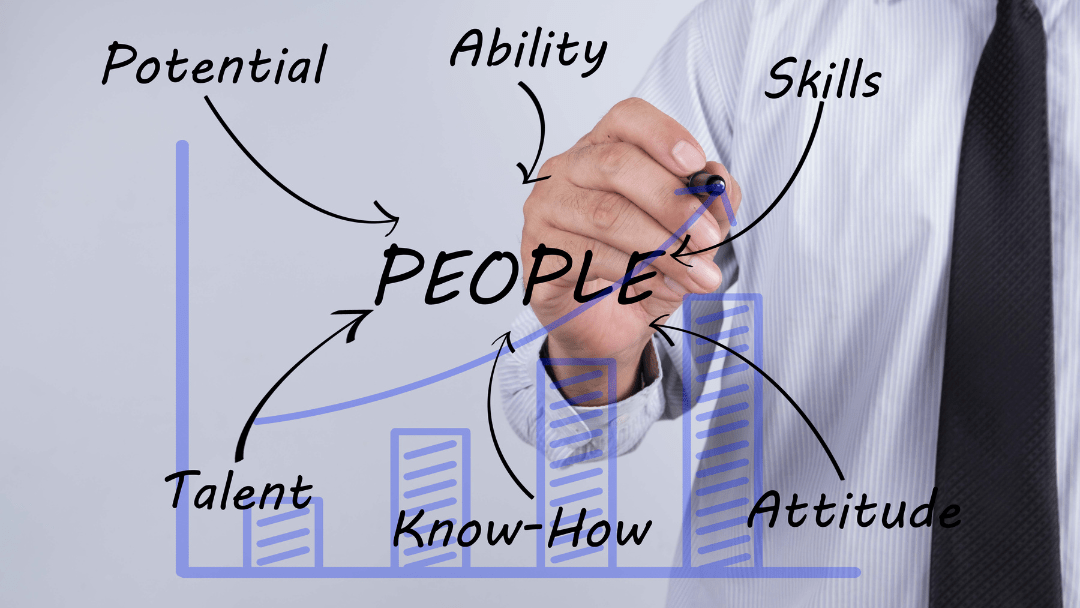
Compare with a different story.
Your business has observed that the composable application marketplace is growing at a compound rate of over 20% per year and hears of how adopters are able to massively outpace their competition in implementing new features.
Your junior developer talent receives an investment – upskilling in a composable application platform. The investment equips them with all they need to know to build, operate support and enhance new applications on the platform. Your senior developers buy-in because they know that the junior team can relieve the load and develop apps to near-live standard. With their mentorship they know that this can increase to cover the whole development lifecycle.
Your team receives the same investment – at a lighter level – an understanding of the component parts, reusable modules and capabilities of the platform. Whilst not being experts, they understand how the AI framework can be applied to assist and automate key parts of the application.
Now your business teams can develop and design the skeleton of the application to match exactly its innovation needs. They may not be able to codify some of the difficult integrations or data transformations but it’s clear what the data sources and transformations need to be.
With this accelerated start, the joint teams quickly develop out a prototype. The AI overlays get developed and tested within the application workflows to assist your overworked teams. You and other key business-level stakeholders get to review and specify the changes needed, which can be handled in an agile fashion since the application elements are both modular and much easier to modify than source code.
The app is cutover to production and operated in a devops fashion. You’ve achieved this innovation in 20-30% of the time of your competition using a more traditional approach. You’ve moved the business forward and you’ve built improvements that your team and your customers will feel. And you’re ready for the next one.
This true (albeit truncated) story embodies many of the dimensions of how a composable application platform can positively impact your talent challenges:
- Training and upskilling an existing workforce
- Enabling increased developer productivity with existing staffing levels
- Staff load relief through automation and AI assist of repetitive skilled tasks
- Increased motivation through increased innovation
- Being a career destination for talent
- Optimised resource allocation with reduced reliance on scarce resources
The future of work and composable AI platforms
“AI won’t replace humans, but humans with AI will replace humans without AI” – I did look up who I should ascribe this quote to… but there are too many variants! I guess that means it’s a truism?
Here’s one I made up on the spot: “Businesses that embrace composable AI platforms will out-innovate businesses that embrace AI without those platforms”. Whoever said that is clearly a sage!
Those same businesses are in competition for the same talent pool. So here’s another one: “Businesses that embrace composable AI platforms will be able to execute more operational cycles per-capita than those businesses who do not.”
And since I’m on a roll, one final one: “businesses able to achieve more operational cycles per capita will be less impacted by the global talent shortage than those businesses achieving fewer cycles.”
So, if you’re already recognising that the talent shortage in Tech is liable to impact your productivity, innovation and competitive pace, it’s time for you to investigate composable AI platforms.
Find out more About Cyferd

New York
Americas Tower
1177 6th Avenue
5th Floor
New York
NY 10036
London
2nd Floor,
Berkeley Square House,
Berkeley Square,
London W1J 6BD